

You might first notice it in a photo. Your jawline looks softer, your cheeks sit a little lower, or the folds beside your mouth seem more obvious even when your face is relaxed. If you have already tried a skin-tightening treatment, it can be frustrating to see those changes remain.
Facial sagging does not automatically mean you need surgery. At Shens Clinic, we want to understand what changes bother you and what treatment can realistically do before recommending an approach.
Your face can change in several ways at once. Collagen and elastin loss makes skin less firm, facial fat can shrink or shift downward, and the tissues supporting the cheeks and jawline gradually loosen. The underlying bone also changes with age.
That explains why sagging skin on the face can look different from person to person. You might have hollow cheeks but a relatively defined jawline. Someone else may have fuller cheeks alongside noticeable jowls and loose skin beneath the chin.
We look at where the changes are happening rather than assuming every concern needs a lifting treatment. Restoring fullness to a hollow cheek, for instance, differs from lifting tissue that has already moved downward.
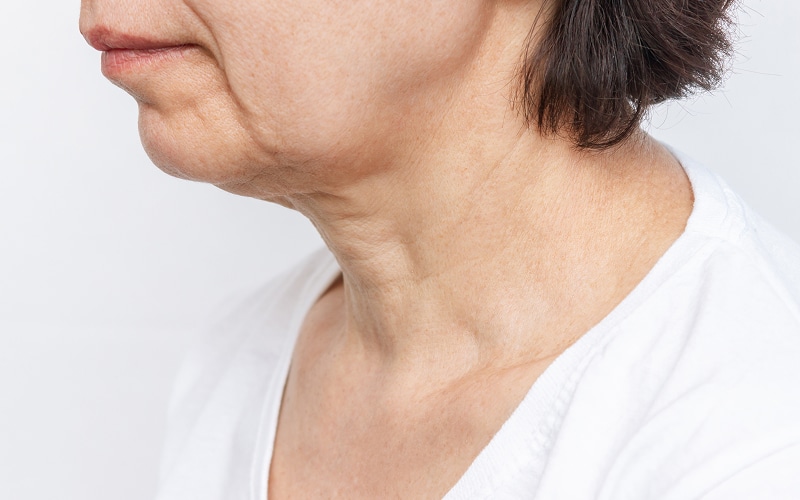
If your jawline has only started to soften, you may want a small improvement without the recovery time of surgery. Non-surgical options can be worth considering, as long as you understand their limits.
A HIFU facelift uses focused ultrasound to stimulate collagen and may gradually improve mild skin laxity. It will not remove significant excess skin. For someone with early cheek or jawline descent, a face thread lift in Singapore may offer temporary support using absorbable threads. Thread lifting involves inserting threads beneath the skin, so it is minimally invasive rather than entirely non-invasive.
Sometimes the problem is not primarily looseness. Imagine noticing that your upper cheeks have become flatter, making the lower face appear heavier. In selected cases, fat transfer to the face can help restore some lost volume. However, adding fullness cannot lift significantly descended tissue. Fat transfer is also a surgical procedure, though it differs from a facelift.
These distinctions matter when deciding what kind of change you can reasonably expect. If you prefer to avoid surgery, we explain what further tightening treatments may realistically achieve, especially when significant tissue descent is present. This helps you decide whether a more modest improvement would be acceptable or whether you would prefer to discuss surgical options

One sign is that the changes remain obvious when your face is at rest. Perhaps the lower cheeks have dropped, your jawline is interrupted by jowls, and loose skin extends towards your neck. If you want those areas repositioned rather than just tightened, a surgical assessment may help.
A facelift can address deeper tissue descent and excess skin in ways non-surgical treatments cannot. A deep plane facelift repositions tissue beneath the superficial muscular layer, rather than relying mainly on skin tightening. The technique we discuss depends on your anatomy, previous treatments, and how much correction you want.
Surgery also involves decisions you shouldn't rush. You need to consider anaesthesia, scars, time away from work and the possibility of complications, including bleeding, infection or nerve injury. You may also need to plan around swelling, follow-up appointments and temporary restrictions on everyday activities, particularly if you have work or family commitments.
Results may last longer than non-surgical treatments, but they aren't permanent or guaranteed.
Two people of the same age can have very different concerns. One may have lost fullness around the temples and cheeks but have little lower-face descent. Another may still have facial volume but notice jowls becoming more prominent in every photograph. Treating both people in the same way would overlook what is causing the change.
During consultation, we examine your face from different angles and consider how it looks when you speak and smile. We also discuss your previous treatments, medical history, recovery needs and what you would consider a worthwhile improvement.
Understanding the cause of facial sagging helps us explain why one treatment may help while another might leave your main concern unchanged. If you prefer to avoid surgery, we can discuss what non-surgical treatment may achieve without suggesting it will give you the same result as a facelift.
There is no particular age at which facial sagging means you should have a facelift. What matters is how far the tissue has descended, the condition of your skin, any volume loss and the change you hope to see.
At Shens Clinic, we will discuss the possible benefits, limitations and recovery involved in each relevant option. Book a consultation to talk through your concerns and decide whether treatment is appropriate for you.
Dr Shenthilkumar Naidu, known as Dr Shens, is Shens Clinic's Medical Director and an MOH-accredited Consultant Plastic Surgeon. He completed plastic surgery training in Singapore and further training at Hanyang University Hospital in South Korea. His clinical work includes facial and body cosmetic procedures.
No. HIFU may provide modest skin tightening for patients with mild facial sagging, but it cannot remove excess skin or reposition deeper facial tissues the way surgery can. If you have noticeable jowls, loose neck skin or significant tissue descent, a surgical facelift may be worth considering for more substantial correction.
A facelift does not necessarily make you look unnatural. The outcome depends on your facial anatomy, the surgical technique used, the extent of correction and how your tissues heal. During your consultation, we discuss the changes you hope to achieve and assess how much lifting is appropriate, keeping your natural facial proportions in mind.
Not necessarily. A thread lift may suit patients with mild to moderate facial sagging who prefer a less invasive treatment with temporary results. However, significant jowls, loose neck skin or substantial tissue descent may require surgical assessment. If you have previously undergone thread lifting, let us know during consultation, as existing threads or tissue changes may affect surgical planning.
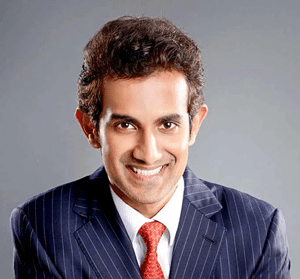
Dr. Shenthilkumar Naidu (Dr. Shens) is a Ministry of Health accredited Consultatn Plastic Surgeon with extensive expertise in cosmetic and reconstructive surgery. He is renowned for his advanced techniques in body contouring and aesthetic enhancements. For more information, visit Shens Clinic.
Monday – Friday: 09:00 am – 06:00 pm
Saturday: 09:00 am – 02:00 pm
Sun and PH: Closed
(Strictly By Appointment Only)
Monday – Friday: 09:00am – 06:00pm
Saturday: 09:00am – 02:00pm
Sun and PH: Closed
(Strictly by appointment only)
Copyright ⓒ Shens Clinic | Privacy Policy | Terms and Conditions .